
An Expat Guide to Raising a Bilingual Baby
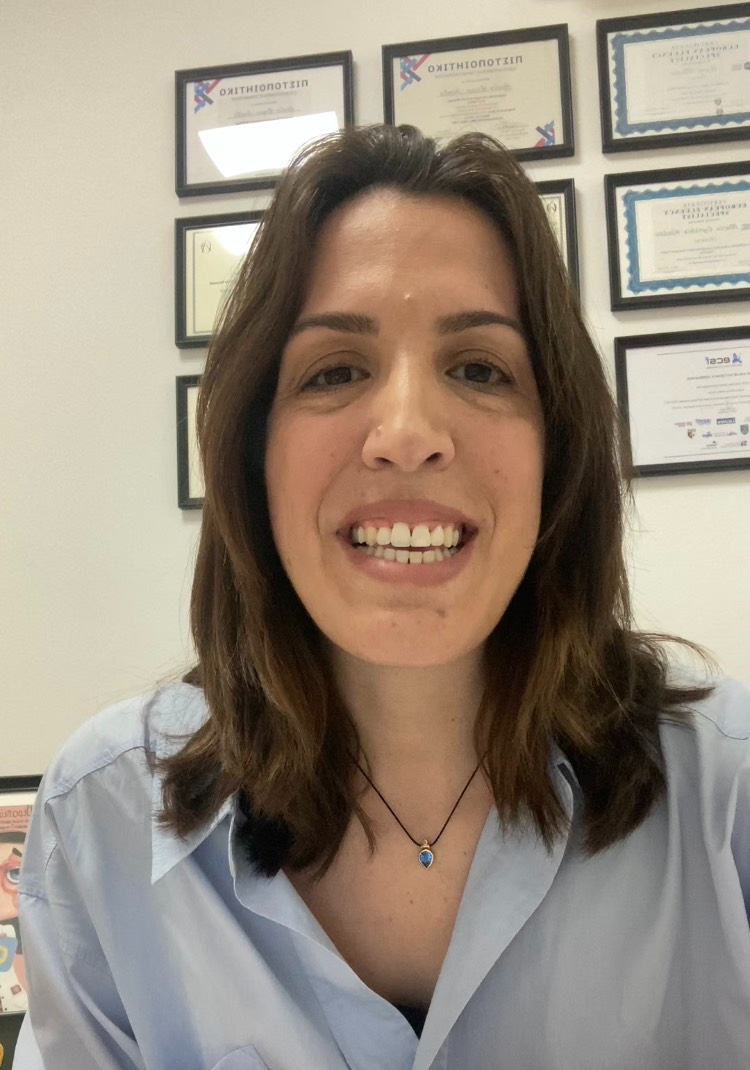
Practical, evidence-based tips by Speech Language Therapist (SLT), Maria Kladou, for expat families raising bilingual kids in Greece - what’s normal, what helps, and when to seek extra support.
When you’re parenting abroad, language shows up in every decision. Greek fills our kitchen; at school and playdates in the UK, my daughters think in English. I grew up the same way – born and raised in Greece, with a Finnish mum - so I know the questions: Will two languages confuse my child? How do we keep both alive when nursery, friends, and daily life pull in different directions? To cut through the noise, SLT Speech Language Therapist Maria Kladou (Echo Logo) has pulled together what evidence says, what to expect, and what actually helps.

What bilingualism really means (and what it doesn’t)
Bilingualism, based on the American Speech-Language-Hearing Association (ASHA) and the Greek Association of Speech Therapists, is simply the ability of a person to understand and/or use two (or more) languages or dialects across contexts. It doesn’t require equal skills in both. Proficiency naturally varies with exposure, use, and context. Some children hear two languages from birth (simultaneous), others add a second later (sequential). Most importantly: bilingualism is not a disorder but a natural phenomenon.
How exposure builds two languages
When a child grows up in a bilingual environment, the course of their language development is shaped by when, how much, how and by whom they connect with in each language. For example, studies show that even a few hours of exposure to a second language in early childhood (e.g. during infancy) are enough to change the way a child produces sounds, depending on the language of the person they speak with.
Further research examines the total amount of time a child hears or uses a language, and findings suggest that the longer the exposure, the more “solid” and accurate the use of the language becomes, particularly in grammatical rules that may be more vulnerable to errors. Another factor is when exposure begins as if the second language begins very early, either alongside the first or shortly after, the child has a better chance of developing distinct language skills for both languages in a more “natural” way. If, on the other hand, the exposure begins later, there may need to make greater effort to "catch" the sounds, flow, vocabulary, and accuracy in grammar.
Finally, the quality of the environment in which the child interacts with each language plays a role: for example if the second language is provided with a variety of speakers (parents, teachers, friends), different contexts (home, school, activities) and whether there is exposure not only to speech but also to stories, books, media and cultural activities. All of these can shape how “rich” the language of the child learning it is. Research in bilingual programs (e.g. French-English) shows that linguistic accuracy(e.g. grammar) is positively associated with exposure, but also with how well parents/caregivers speak the language.
The upsides (with nuance)
Bilingualism isn't just about how many words a child knows but it affects their entire development. Research shows that children who grow up with two languages often demonstrate better selective attention and flexible thinking, which means that they can more easily pay attention to what matters, ignore distractions, and change course when necessary. Consider, for example, a child who speaks Greek at home and English at school; By switching languages depending on the environment, they train their brain daily to "flip a switch," which also carries over to non-linguistic skills, such as changing strategy in a game or finding alternative solutions to a problem. In addition, neuroimaging studies also show that using two languages is associated with changes in brain structure. Simply put, this means that the child's brain adapts to manage two language systems, a kind of "training" that leaves its mark on the structures involved in attention and control.
Finally, another important factor is what is known as "cognitive reserve”. According to this, adults and older people who have grown up with two or more languages seem to experience slower cognitive decline associated with aging, such as dementia. Thus, a child who grows up today in a Greek home but attends an international school can not only acquire two languages but also "build" skills that will be useful throughout their life, from easier learning of a third language to greater brain resilience in the future.
Please note that the above vary across studies (age, tasks, and language balance matter), but for families, the cultural, relational, and identity benefits are immediate and undeniable.
What’s normal (and what’s not): common worries for parents
Despite its significant benefits, bilingualism also presents challenges related to both linguistic and cognitive development, especially when the appropriate conditions for support are not in place.
One of the main difficulties is unequal exposure to the two languages: if a child hears or uses one language more often than the other, there may be a delay in the development of vocabulary or grammatical structures in the less frequently used language.
An additional issue raised by the research of Byers-Heinlein, Jardak, and Lew-Williams (2021) is the misdiagnosis or delayed diagnosis of language disorders in bilingual children. Because standard language tests are often designed for monolingual children, they may not consider the dual experience of exposure to language. Thus, some children may be misdiagnosed (either their delays are attributed to bilingualism, or conversely, the disorder may not be recognized in time).
Finally, an important issue highlighted by many parents and educators is social/cultural pressure: the child may experience pressure to use mainly the language of the majority (e.g., at school or with classmates), to avoid "difference," or to feel that their home language is not valued or "fits in”. This can lead to either reduced use of the mother tongue/first language or the acceptance of incorrect linguistic patterns.
Common, typical bilingual patterns
Uneven skill across languages (stronger in the school language or the home language depending on exposure).
Code-switching (mixing languages) within a sentence - this is normal and rule-governed.
Slightly smaller vocabulary in each language separately, with a strong total vocabulary across both.
Temporary plateaus after starting nursery/school in a new language.
Red flags (seek a bilingual-informed assessment)
Regression or loss of skills in both languages.
Very limited vocabulary and short phrases in both languages after age 2.5–3.
Difficulty following simple directions in the stronger language.
Struggles with play, social communication, or understanding - not just pronunciation.
Bilingual children and learning difficulties
Bilingualism doesn’t cause dyslexia or Developmental Language Disorder. If a child has an underlying language-based difficulty, it appears in both languages, though it may be easier to spot in the language they use most. That’s why dual-language assessment and early support matter. Families do not need to drop a home language.
When a child grows up in a bilingual environment and at the same time has learning difficulties (e.g., dyslexia or developmental language disorder), we often see a more complex picture during their language development. It is not that bilingualism "causes" the difficulty, but the coexistence of two languages can make it more difficult to distinguish between what is due to limited exposure and what is due to a real disorder. For example, a child may have difficulty recognizing or recalling words in the second language or may be slow to name objects, which resemble symptoms of dyslexia but may simply reflect less practice.
On the other hand, research on Greek-speaking bilingual children, for example, shows that when there is indeed a learning difficulty, it manifests itself in both languages - with problems in phonological processing, grammatical accuracy, or comprehension of narratives, similar to those of monolingual children with the same disorder. That is why experts emphasize that timely and dual assessment (in both languages) is crucial so that the normal peculiarities of bilingualism are not confused with signs of learning difficulties.Simply put, bilingualism is not a "barrier" to learning, but it does make the landscape more complex and requires a more careful look so that children receive the right support at the right time.
Everyday routines that work
One Home, One Language: Choose a pattern that feels natural - e.g., Greek at home, community language outside; or one parent–one language. Consistency is better.
Micro-moments: Narrate routines (cooking, bath time) in the target language for 5–10 minutes at a time.
Books and songs: Keep a small rotating basket of both/ all languages near the sofa/bed (audiobooks count!).
Grandparent time: If possible, weekly calls or touchpoints in the minority language can help with language development and games like “Can you find…?”, sing a song, read a short book.
Playdates and clubs: Look for bilingual/heritage language groups or set up a simple story-and-snack circle with other expat families.
Screens with purpose: If you use screens, choose subtitles in the target language and talk about what you’re watching.
Labels and lists: Label common items at home in both languages; keep a family word list on the fridge and add 5 new words each week.[EN3]
Talk to the teachers: Once your child/ children are in school, let them know about which language you’re building at home and share your goals with them so that they can better support your child/ children.
When to seek extra support (and from whom)
Growing up bilingual, a child acquires a small "world" of languages within them. It may seem more complicated or raise questions about whether everything will be okay, but the truth is that every step, every word, and every game with both languages is an investment in their future. With support, patience, and daily rich language stimuli at home and at school, children not only learn two languages, but also develop skills that will be useful to them in every aspect of their lives. The most important thing? Watch them play, talk, make mistakes, and laugh, because every mistake is a small step forward in the exciting world of bilingualism.
FAQs:
Will two languages delay my child’s speech? No. Bilingualism doesn’t cause language delay. Look at progress in both languages and total vocabulary.
How much exposure is “enough”? There’s no magic percentage; daily, high-quality interaction matters most. Aim for consistent, meaningful use.
Should we stop the home language if there’s a delay? No, keeping the home language supports bonding and long-term language growth.
Is code-switching a problem? It’s typical and rule-based. It shows flexibility, not confusion.
My child prefers the school language, what now? Protect daily minority-language time at home and create reasons to use it (playmates, grandparents, routines).
Where to Learn More And How to Work with Maria

Maria is a certified Speech-Language Pathologist and European Stuttering Specialist with over 15 years of experience supporting children and families. She has been working with children of all ages, as well as individuals experiencing speech, language, fluency, and communication difficulties.
She is the founder and owner of Echologo, a private practice center dedicated to providing personalized, evidence-based therapy in a warm and supportive environment. Her approach combines professional expertise with empathy, patience, and a deep understanding of each child’s unique needs.
As a mother of two sweet boys (aged 4 and 6), she truly understands both the joys and the concerns that come with parenting. She believes in partnering closely with parents, empowering them with practical tools and guidance so they feel confident supporting their child’s communication journey at home.
Her mission is simple: to help every child find their voice and communicate with confidence.
Come and say ‘hi’ over on Instagram @echologo.gr


Comments